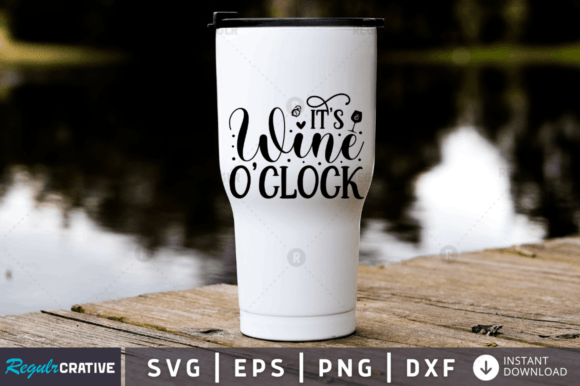
It’s Wine O’Clock SVG Design
A Designer’s First Glance: Charm, Clarity, and Craftsmanship
When I opened It’s Wine O’Clock SVG Design, my first thought wasn’t “cute quote”—it was “this has presence.” The layout is clean but relaxed, with a gentle curve to the phrase that mimics the tilt of a wine glass stem. There’s no clutter, no overwrought script or distracting flourishes—just confident lettering with subtle weight variation that reads clearly at a glance. As an embroidery designer who evaluates hundreds of graphics each season, I appreciate how this design avoids common pitfalls: no ultra-thin serifs, no overlapping letters, and no awkward spacing that would vanish under satin stitch. It feels like something you’d confidently embroider on a linen tea towel for your best friend’s birthday—or print on a boutique apron for a local wine bar pop-up.
Real-World Stitching: How It Holds Up on Actual Projects
Last week, I prepped a small-batch run of embroidered canvas tote bags for a client launching a women-led wine club. I chose It’s Wine O’Clock SVG Design as the focal point—centered just below the strap seam, sized to 3.8 inches wide. On medium-weight canvas with tear-away stabilizer, it stitched cleanly in under 90 seconds. The letterforms held crisp edges; even the subtle curve in the “O” didn’t distort. No puckering, no thread breaks. That’s not accidental—it’s evidence of thoughtful digitizing (or at least SVG-to-embroidery conversion) that respects fabric behavior.
I also tested it on a lightweight cotton sweatshirt—slightly stretchy, brushed interior. Here, cutaway stabilizer was essential, and I reduced stitch density by 12% in the fill areas. Still, the phrase remained legible and warm, not stiff or industrial. That versatility matters: whether you’re stitching for a baby onesie (go smaller, use soft poly thread), a holiday kitchen towel (add a single vine motif as a companion element), or a patch for a denim jacket (reinforce with backing + heat-seal adhesive), It’s Wine O’Clock SVG Design adapts without demanding heroic fixes.
Where Caution Is Warranted—Not Flaws, Just Realities
This isn’t a one-size-fits-all embroidery file—and that’s okay. On highly textured fabrics like bouclé or thick terry cloth, the fine interior curves (especially in the lowercase “g” and “l”) may soften visually. On dark garments, avoid light pastel threads unless you’re layering with underlay stitches—contrast is your friend here. And if you’re planning to stitch it inside a 3-inch hoop? Resize down carefully: below 2.5 inches, test the “W” and “O” closely—the inner counters can close up, losing readability. Also, skip this design for curved surfaces like baseball caps unless you’ve digitized or adjusted it specifically for that application. The original SVG doesn’t include built-in cap-ready contours.
As a Graphics asset in the Crafts category, it shines brightest when treated as a *starting point*—not a finished embroidery file. If you’re an Etsy seller offering custom embroidered mugs or signs, remember: this SVG will need proper digitizing before machine embroidery. Don’t assume the file includes stitch types, underlay, or pull compensation. Always verify.
What It Adds to Your Finished Product—Beyond the Obvious
It’s Wine O’Clock SVG Design does more than state a mood—it elevates perceived value. A plain cotton tote becomes a curated gift. A basic crewneck transforms into a conversation starter at a vineyard tour. Customers recognize authenticity: this isn’t mass-produced clip art. It’s got rhythm, intention, and quiet confidence—traits that build trust in handmade product listings and boutique branding.
For craft business owners, that translates directly to engagement. On social media mockups, it pairs effortlessly with natural lighting and wood-grain backgrounds—no heavy filters needed. In printable mockups for your Etsy shop, it reads well at thumbnail size. And because the phrase is universally understood (yet never cliché), it performs across audiences: bridal shower favors, mom groups, retirement gifts, even corporate wellness swag (yes, really—pair it with a reusable wine tumbler).
Practical Designer Notes Before You Stitch
- Always stitch a test on scrap fabric—same weight, same stabilizer, same thread colors you’ll use for the final piece.
- Check contrast: view your thread palette against both light and dark fabric swatches in natural light—not just screen previews.
- Review stitch density—especially in the curved strokes. Overly dense fills on lightweight fabrics cause stiffness and shadowing.
- Confirm hoop size compatibility. If working with tight spaces (like pocket corners or baby bibs), measure your design’s bounding box before hooping.
- Inspect tiny details at 200% zoom in your embroidery software. Look for stray nodes or unconnected paths that could cause jump stitches.
- Test black-and-white mockups. Does the phrase retain character without color? It should.
- Use appropriate stabilizer: tear-away for stable wovens, cutaway for knits, and fusible + tear-away for sheer or delicate layers.
- If selling finished items commercially, verify licensing terms—some SVG bundles allow personal use only, while others grant commercial rights for physical products. When in doubt, contact the creator.
Final Thought: A Reliable, Human-Centered Design Asset
It’s Wine O’Clock SVG Design won’t win awards for avant-garde complexity—but it doesn’t need to. Its strength lies in its reliability, warmth, and quiet professionalism. It works because it respects the maker’s time, the fabric’s limits, and the customer’s eye. Whether you’re stitching for joy, gifting with meaning, or building a craft business rooted in authenticity, this design earns its place in your digital embroidery file library—not as filler, but as a trusted tool. Use it thoughtfully, test it honestly, and let its easy charm do the rest.